Steve Jobs: The Mindset That Built Apple
Steve Jobs: The Mindset That Built Apple
Introduction
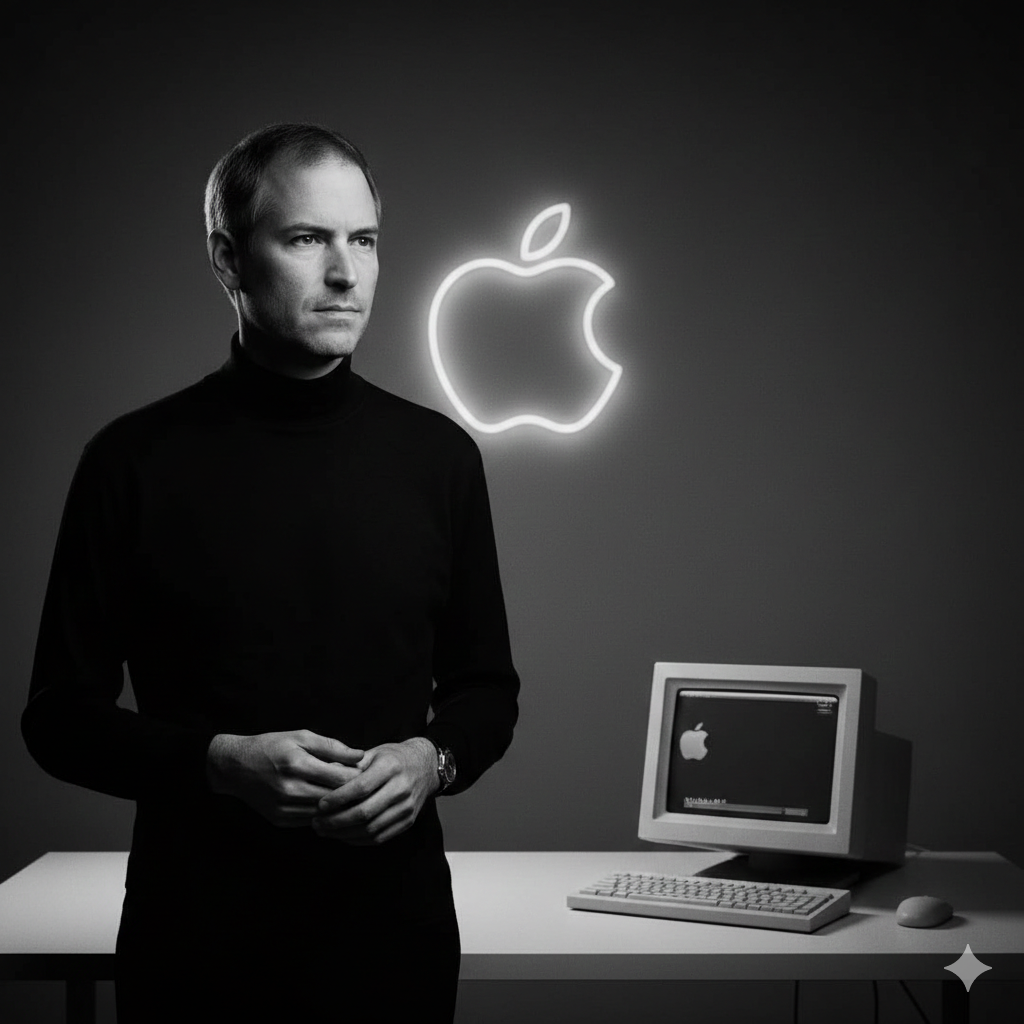
Steve Jobs is often remembered as a visionary, a showman in a black turtleneck who stood on brightly lit stages and unveiled products that seemed to arrive from the future. But behind the iconic presentations and revolutionary devices was something far more powerful than charisma or technical skill: a distinct mindset. The rise of Apple—from a garage startup to one of the most valuable companies in the world—was not simply the result of advanced engineering or clever marketing. It was the product of Steve Jobs’ way of thinking about creativity, simplicity, perfection, failure, and human potential.
Jobs’ mindset shaped Apple’s culture, products, and long-term strategy. It influenced how teams worked, how problems were solved, and how technology was connected to human experience. This article explores the core elements of Steve Jobs’ mindset and explains how those ideas became the foundation upon which Apple was built.
1. Vision Before Product
At the heart of Steve Jobs’ mindset was vision. He did not begin with the question, “What can we build with today’s technology?” Instead, he asked, “What should exist?” Jobs imagined products that did not yet exist and then pushed technology, design, and people to catch up with that vision.
This forward-looking approach allowed Apple to lead rather than follow. The Macintosh, the iPod, the iPhone, and the iPad were not reactions to market demand; they were creations that defined new markets. Jobs believed that customers often did not know what they wanted until they saw it. His role, as he saw it, was to reveal possibilities people had not yet imagined.
By prioritizing vision over incremental improvement, Jobs ensured that Apple focused on breakthroughs rather than minor upgrades. This mindset set Apple apart from competitors who relied heavily on market research and trend-following.
2. Obsession With Simplicity
Steve Jobs: The Mindset That Built Apple
One of the most recognizable traits of Steve Jobs’ mindset was his obsession with simplicity. He believed that simplicity was not about removing features for the sake of minimalism, but about achieving clarity. True simplicity, in Jobs’ view, was the result of deep understanding.
Jobs famously said that “simple can be harder than complex.” Apple products reflected this belief. From the single-button mouse to the clean interface of iOS, Apple focused on reducing friction between the user and the technology. Every unnecessary button, menu, or instruction was seen as a failure of design.
This mindset required relentless discipline. Teams were often asked to remove features they had worked on for months. Jobs pushed designers and engineers to rethink their assumptions and find more elegant solutions. The result was technology that felt intuitive and human, even when it was technically complex underneath.
3. Perfectionism and High Standards
Steve Jobs was known for his uncompromising standards. He demanded excellence not only in how Apple products worked, but in how they looked, felt, and even how their packaging opened. To some, this perfectionism seemed extreme or even unreasonable. To Jobs, it was essential.
He believed that people could sense quality, even if they could not always articulate it. This belief drove Apple to care about details that other companies ignored, such as the internal layout of circuit boards or the smoothness of animations. Jobs often argued that a product should be beautiful inside and out.
This mindset created intense pressure, but it also produced extraordinary results. Apple products became synonymous with quality and craftsmanship. Jobs’ refusal to accept “good enough” helped Apple earn trust and loyalty from users around the world.
4. Technology Meets the Humanities
Unlike many technology leaders, Steve Jobs emphasized the importance of the humanities. He believed that the most powerful innovations occurred at the intersection of technology and liberal arts. This idea became a core principle at Apple.
Jobs drew inspiration from calligraphy, music, design, and philosophy. His interest in typography directly influenced the Macintosh, which was one of the first personal computers to offer beautiful fonts and layout options. He understood that technology should not only function efficiently but also inspire emotionally.
This mindset helped Apple create products that felt personal rather than mechanical. Apple devices were designed not just as tools, but as companions for creativity, communication, and self-expression. By blending engineering with art, Jobs ensured that Apple appealed to both logic and emotion.
5. Courage to Say No
One of Steve Jobs’ most powerful habits was his ability to say no. He believed that focus was about deciding what not to do. Apple, under Jobs’ leadership, famously maintained a small and tightly controlled product lineup compared to its competitors.
Jobs understood that spreading resources too thin would dilute quality and innovation. By saying no to countless ideas, features, and products, Apple could concentrate on a few things and do them exceptionally well. This focus allowed teams to work deeply rather than broadly.
The mindset of selective ambition became a strategic advantage. Apple did not try to dominate every market. Instead, it entered new categories only when it believed it could redefine them.
6. Fearless Approach to Failure
Steve Jobs’ life was marked by failure as much as success. One of the most significant moments was his removal from Apple in 1985, a company he had co-founded. Rather than being defeated, Jobs viewed this failure as a turning point.
During his time away from Apple, he founded NeXT and acquired Pixar. Although NeXT was not commercially successful, its technology later became the foundation for macOS. Pixar, meanwhile, revolutionized animated filmmaking.
Jobs later described this period as one of the most creative in his life. His mindset treated failure as a teacher rather than an endpoint. When he returned to Apple in 1997, he brought with him humility, clarity, and renewed focus.
7. Belief in Small, Talented Teams
Steve Jobs believed that small teams of exceptionally talented people could outperform large organizations. He often compared teams to bands rather than factories. Chemistry, trust, and shared passion mattered more than hierarchy.
At Apple, Jobs worked closely with designers, engineers, and marketers, encouraging intense collaboration. He believed that innovation happened when ideas collided, not when departments operated in isolation.
This mindset influenced Apple’s organizational structure, which emphasized functional expertise over rigid divisions. Even as Apple grew, Jobs tried to preserve the startup-like energy that fueled creativity.
8. Reality Distortion and Motivation
One of the most controversial aspects of Steve Jobs’ mindset was what colleagues called his “reality distortion field.” Jobs had an extraordinary ability to convince people that the impossible was possible.
He set aggressive deadlines and ambitious goals that often seemed unrealistic. Yet time and again, teams achieved results they initially believed were unattainable. Jobs’ confidence and intensity pushed people beyond their comfort zones.
While this approach was stressful, it also unlocked hidden potential. Jobs believed that people were capable of far more than they thought, and his mindset was focused on drawing out that potential.
9. End-to-End Control
Steve Jobs believed that great user experiences required end-to-end control. Apple designed both hardware and software, ensuring seamless integration. Jobs disliked relying on external systems that could compromise quality.
This mindset allowed Apple to deliver cohesive experiences rather than fragmented ones. The tight integration of iPhone hardware, iOS software, and Apple services became a defining strength of the company.
By controlling the entire ecosystem, Apple could innovate faster and maintain consistent standards. Jobs saw this control not as limitation, but as freedom to create something truly refined.
10. Legacy of the Mindset
Steve Jobs passed away in 2011, but his mindset continues to shape Apple. The company’s emphasis on design, simplicity, focus, and user experience reflects the principles Jobs instilled over decades.
More importantly, his mindset has influenced entrepreneurs, designers, and leaders worldwide. Jobs demonstrated that success is not just about intelligence or resources, but about clarity of thought, courage of conviction, and commitment to excellence.